
South Sudan is one of the world’s newest nations and a destination that draws adventurous travelers, humanitarian workers, and business visitors alike. Before you pack your bags, understanding travel insurance for South Sudan is essential. This guide covers what your policy should include, the health risks you may face, and how to choose the right coverage for your trip.
Do You Need Travel Insurance for South Sudan?
Travel insurance is not legally required for entry into South Sudan. Unlike some countries that mandate proof of insurance at the border, South Sudan does not enforce this as a visa condition.
However, not requiring insurance is very different from not needing it. The Australian government’s Smartraveller advisory states plainly: “Get comprehensive travel insurance before you leave. Your policy needs to cover all overseas medical costs, including medical evacuation.” The UK’s FCDO similarly advises: “If you choose to travel, research your destinations and get appropriate travel insurance.”
The reality is that South Sudan has limited healthcare infrastructure, and a serious medical emergency could require evacuation to Nairobi, Kampala, or even further. Without insurance, these costs can easily reach $50,000 to $100,000 or more.
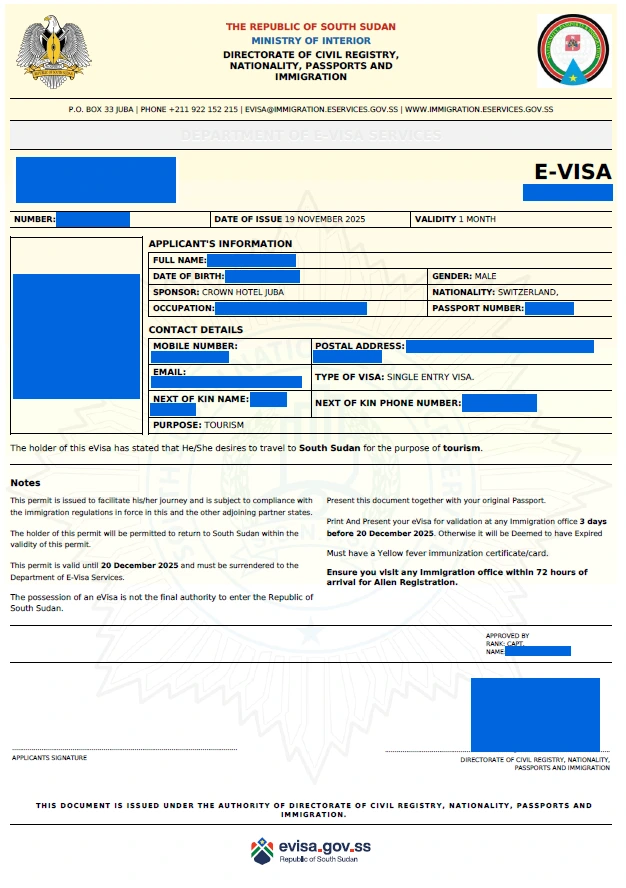
For travelers applying for a South Sudan eVisa, having insurance in place before departure is a practical necessity rather than a bureaucratic one.
What Should South Sudan Travel Insurance Cover?
Not all travel insurance policies are created equal, and a standard policy may not provide adequate coverage for a high-risk destination like South Sudan. Here are the key areas your policy should address.
Medical Expenses and Hospitalization
Your policy should cover at least $100,000 in medical expenses. South Sudan’s healthcare facilities are extremely limited, and even basic treatment may require transfer to a neighboring country. Look for policies that cover:
- Hospital stays and surgical procedures
- Prescription medications
- Doctor consultations and diagnostics
- Dental emergencies
- COVID-19 treatment (verify current policy terms)
Emergency Medical Evacuation
This is arguably the most critical component of any South Sudan travel insurance policy. Medical evacuation by air ambulance from Juba to Nairobi can cost $25,000 to $50,000 or more. Your policy should explicitly cover:
- Air ambulance evacuation to the nearest adequate medical facility
- Repatriation to your home country if needed
- Emergency coordination and logistics
- A minimum of $250,000 in evacuation coverage is recommended
Trip Cancellation and Interruption
South Sudan’s political and security situation can change rapidly. Your policy should protect your financial investment if your trip is disrupted by:
- Government travel advisories being upgraded
- Civil unrest or armed conflict
- Natural disasters
- Personal emergencies (illness, family bereavement)
- Flight cancellations or delays
Personal Liability and Legal Assistance
Personal liability coverage protects you if you accidentally cause injury to someone or damage property. In a country where legal systems may be unfamiliar to visitors, legal assistance coverage is also valuable. Aim for at least $100,000 in personal liability coverage.
Baggage and Personal Belongings
While less critical than medical coverage, baggage protection is still worth having. Airlines operating routes to Juba occasionally mishandle luggage, and replacing essentials in South Sudan can be difficult and expensive. Check that your policy covers:
- Lost, stolen, or damaged baggage
- Delayed baggage (emergency purchases)
- Electronics and valuables (may need a separate rider)
Health Risks in South Sudan
Understanding the health landscape is essential for choosing appropriate insurance and preparing for your trip.
Required and Recommended Vaccinations
The CDC recommends several vaccines for travelers to South Sudan:
| Vaccine | Status | Notes |
|---|---|---|
| Yellow Fever | Required | Mandatory for arriving travelers from all countries (9 months+) |
| Hepatitis A | Recommended | Risk from contaminated food and water |
| Typhoid | Recommended | Especially for adventurous eaters or rural travel |
| Routine (MMR, Tetanus, Polio) | Recommended | Ensure up-to-date before travel |
| Hepatitis B | Recommended | For those at risk of blood/needle exposure |
| Meningitis | Recommended | During dry season (December-June) in the meningitis belt |
| Rabies | Recommended | For remote-area travelers, long stays, or those working with animals |
Visit your doctor 4-6 weeks before travel to arrange vaccinations. Note that yellow fever vaccine availability may be limited in some countries, so plan ahead.
Malaria Prevention
Malaria is present throughout all of South Sudan. You will need prescription antimalarial medication before, during, and after your trip. Common options include:
- Atovaquone-proguanil (Malarone)
- Doxycycline
- Mefloquine
In addition to medication, use insect repellent, sleep under treated mosquito nets, and wear long sleeves during peak mosquito hours.
Healthcare Infrastructure
South Sudan’s healthcare system is among the weakest in the world. Key facts:
- Juba Teaching Hospital is the main referral facility but faces chronic shortages of supplies and staff
- Outside Juba, healthcare facilities are extremely basic
- Many areas have no functioning medical facilities
- Pharmaceutical supplies are unreliable
- Blood supply and surgical capacity are very limited
This reality underscores why medical evacuation coverage is non-negotiable for South Sudan travel.
Types of Travel Insurance for South Sudan
Standard Travel Insurance
Some standard travel insurance providers cover South Sudan, but always verify before purchasing. Providers like World Nomads and Insubuy offer policies that include South Sudan. However, standard policies may have exclusions for:
- Acts of war or civil unrest
- Travel to areas under government advisory warnings
- High-risk activities
Read the fine print carefully, especially regarding conflict-related exclusions.
High-Risk Destination Insurance
Because South Sudan carries elevated risk ratings from most governments, specialist high-risk insurance may be necessary. Providers like High Risk Voyager specialize in coverage for dangerous destinations. These policies typically offer:
- War and terrorism coverage
- Kidnap and ransom protection
- Political evacuation
- Higher medical evacuation limits
These policies cost more than standard insurance but provide coverage gaps that standard policies leave open.
Business Travel Insurance
If you are traveling to South Sudan for work, your employer may provide corporate travel insurance. Verify that it:
- Explicitly covers South Sudan (many corporate policies exclude high-risk countries)
- Includes adequate medical evacuation limits
- Covers business equipment and electronics
- Provides 24/7 emergency assistance
How Much Does South Sudan Travel Insurance Cost?
Travel insurance for South Sudan typically costs more than standard destination coverage due to the elevated risk level. Approximate costs for a 2-week trip:
| Coverage Level | Estimated Cost (2 weeks) |
|---|---|
| Basic medical + evacuation | $75 – $150 |
| Comprehensive standard | $150 – $300 |
| High-risk specialist | $200 – $500+ |
| Business/comprehensive | $300 – $600+ |
Factors that influence your premium include:
- Your age and medical history
- Length of stay
- Coverage limits selected
- Whether war/conflict coverage is included
- Your country of residence
How to Choose the Right Policy
Follow these steps to select appropriate South Sudan travel insurance:
- Check government advisories from your home country – some insurers exclude destinations with “Do Not Travel” warnings
- Verify South Sudan is covered – call the insurer directly if the country isn’t listed
- Prioritize medical evacuation – ensure coverage of at least $250,000
- Read exclusions carefully – especially regarding war, terrorism, and civil unrest
- Confirm repatriation coverage – including return of remains in worst-case scenarios
- Check 24/7 emergency assistance – you need a hotline that works from South Sudan
- Compare multiple quotes – use comparison sites or contact specialists directly
Before finalizing your visa application, make sure your insurance is confirmed and you have documentation accessible both digitally and in print.
Frequently Asked Questions
Is travel insurance mandatory for South Sudan?
No, travel insurance is not a legal requirement for entering South Sudan. However, it is strongly recommended by all major government travel advisories due to the country’s limited healthcare infrastructure and elevated security risks. The cost of medical evacuation without insurance can be catastrophic.
What is the best travel insurance for South Sudan?
The best policy depends on your trip purpose. For general travel, providers like World Nomads and Insubuy offer coverage including South Sudan. For high-risk or conflict-zone travel, specialist providers like High Risk Voyager offer more comprehensive coverage including war and terrorism protection. Always verify that South Sudan is explicitly covered before purchasing.
Does travel insurance cover medical evacuation from South Sudan?
Most comprehensive travel insurance policies include medical evacuation coverage, but you should verify the limits. For South Sudan, a minimum of $250,000 in evacuation coverage is recommended. Air ambulance from Juba to Nairobi can cost $25,000 to $50,000, and repatriation to your home country can cost significantly more.
Do I need special vaccinations for South Sudan?
Yes. Yellow fever vaccination is **required** for all arriving travelers aged 9 months and older. The CDC also recommends Hepatitis A, Typhoid, routine vaccines (MMR, Tetanus, Polio), and malaria prophylaxis. Visit your doctor 4-6 weeks before travel to arrange vaccinations and antimalarial medication.
Is South Sudan safe for tourists?
South Sudan carries high-risk travel advisories from most governments. The UK FCDO advises against all travel, and the US State Department issues a Level 4 “Do Not Travel” advisory. While some travelers do visit safely, the security situation can change rapidly. Comprehensive travel insurance, including evacuation and conflict coverage, is essential regardless of your travel plans.
Can I buy travel insurance after arriving in South Sudan?
Most travel insurance policies must be purchased before departure from your home country. Some providers allow purchase up to 24-48 hours before departure, but buying after arrival is generally not possible. Plan ahead and secure your policy before you leave. If you are still preparing your visa requirements, that is the ideal time to arrange insurance as well.